

Description
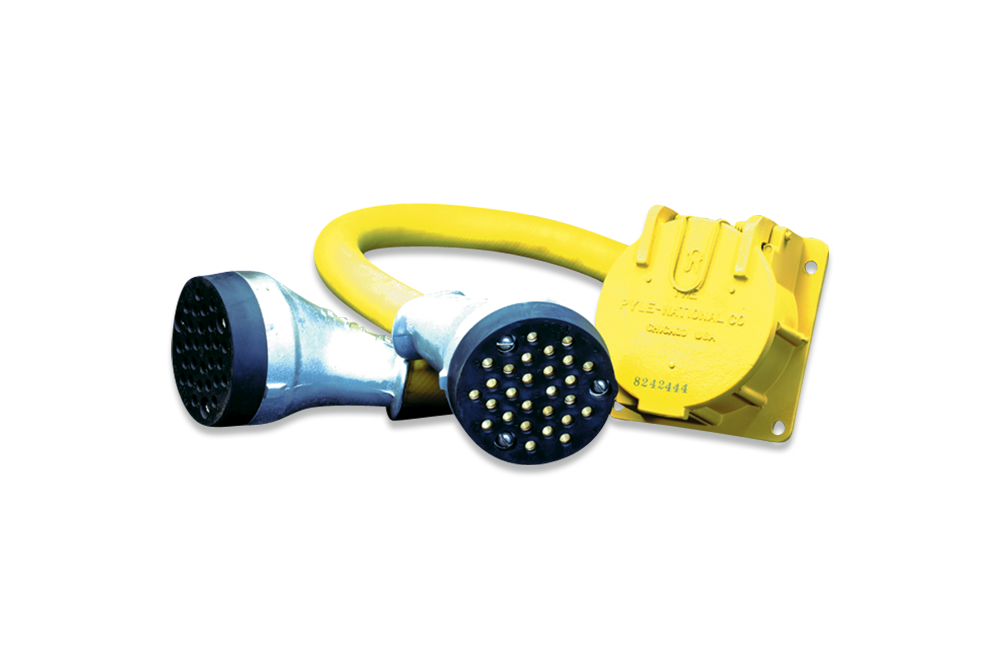
Train Line 27 pole connector solutions provide reliable train line communication and control for modern passenger and commuter rail fleets. Designed around long-established 27-point multiple-unit (MU) practice and Amtrak special service requirements, Amphenol Industrial Operations’ Train Line receptacles and jumper assemblies help keep consists connected electrically, even in harsh outdoor rail environments.
Mounted at the ends of locomotives, cab cars and coaches, these 27 pole train line connector interfaces carry low-voltage control and communication signals across the entire train. Functions such as door control, public address, brake status and traction commands can be distributed from a single control point, supporting safe, coordinated operation in rail mass transit and intercity applications.
Table of Contents
- Train Line Connector Overview
- Key Features & Benefits
- Electrical & Signal Performance
- Mechanical & Environmental Design
- Applications in Rail Mass Transit
- Ordering & Configuration Options
- Resources & Related Solutions
Train Line Connector Overview
The Train Line family is a 27 pole train line connector system consisting of car-end receptacles, heavy-duty jumper cable assemblies and stowage receptacles. Together, these components create a continuous train-line backbone that remains electrically stable under vibration, coupling/uncoupling and demanding environmental conditions found in daily rail service.
Amphenol Industrial Operations builds these connectors on proven 27-point MU geometry, then adds application-specific enhancements for passenger and commuter rail fleets. Keying features, robust covers and rail-grade cable constructions help prevent mis-mating, protect contacts between uses and extend service life in busy yards and terminal environments.
For engineers and fleet managers, a standardized 27 pole train line connector solution simplifies vehicle integration, supports consistent wiring practices and reduces the risk of compatibility issues when cars and locomotives are reconfigured throughout their lifecycle.
Key Features & Benefits
Train Line receptacles and jumpers are engineered specifically for the electrical, mechanical and environmental demands of rail mass transit and intercity passenger service.
- 27-point train-line architecture – Supports up to 27 low-voltage control and communication circuits through a single 27 pole train line connector interface.
- Amtrak special service compatibility – Versions are available with keying, wiring and visual cues tailored to Amtrak-defined train line requirements.
- Heavy-duty receptacle and jumper hardware – Rugged housings, molded elastomeric seals and spring-loaded covers support reliable operation in harsh outdoor environments.
- Rail-grade cable constructions – Jumper assemblies use flexible, durable cable designed for repeated coupling, uncoupling and routing along car ends.
- Clear mating and alignment features – Keying and guide features help operators align connectors correctly and reduce the risk of pin damage.
- Serviceable and replaceable – Jumper cables and receptacles can be serviced or replaced independently to support long fleet lifecycles.
These features help train operators improve uptime, simplify maintenance practices and maintain consistent control and communication performance across mixed consists and evolving rolling stock fleets.
Electrical & Signal Performance
Although many contacts in a 27 pole train line connector carry low-voltage signals, the interface must still meet demanding electrical requirements for rail applications. Train Line connectors are designed to support:
- Multi-circuit control and communication – Up to 27 circuits for functions such as door control, brake status, public address and multiple-unit traction commands.
- Mixed conductor sizes – Combination of heavier-gauge conductors for higher-demand circuits and smaller-gauge conductors for signal-level functions.
- Stable contact resistance – Contact materials and plating selected for low resistance, low temperature rise and long-term stability.
- Dielectric performance – Insulation and creepage/clearance distances sized for typical passenger-rail control voltages and safety margins.
By consolidating these functions into a single 27 pole train line connector per car end, system designers can reduce wiring complexity, minimize connector count and maintain a clear, traceable map of train-line circuits for diagnostics and maintenance.
Mechanical & Environmental Design
Rail equipment experiences shock, vibration, temperature extremes, moisture and contaminants every day. Train Line receptacles and jumpers are designed from the ground up to withstand these conditions over long service intervals.
- Rugged housings – Metal connector bodies provide strength and impact resistance at the car end, while maintaining manageable weight for operators.
- Keyed alignment – Housing keyways and alignment features guide the plug into the receptacle, reducing the likelihood of bent pins or mis-mating.
- Spring-loaded protective covers – Receptacle covers shield contacts from dirt, water and ballast fines when jumpers are not connected.
- Sealing components – Gaskets and molded elastomeric elements help provide a raintight barrier at the mating interface.
- Heavy-duty strain relief – Jumper assemblies incorporate strain relief at the back shell to protect the cable from flex and pull forces.
These mechanical and environmental design features help maintain connector integrity through repeated coupling cycles, yard handling, washdowns and long-term exposure to outdoor conditions along the train’s exterior.
Applications in Rail Mass Transit
The Train Line connector system is used wherever coordinated control and communication signals must be distributed along the full length of a consist. Typical applications include:
- Intercity passenger trains – Connecting locomotives, cab cars and coaches in push-pull or multiple-unit configurations.
- Commuter rail services – Supporting frequent reconfiguration of train sets and reliable train-line control on busy regional routes.
- Urban rail and mass transit – Providing train-line communication between railcars in metro and suburban transit systems.
- Fleet overhauls and refurbishment programs – Upgrading existing rolling stock with new or replacement train-line receptacles and jumper assemblies.
Standardizing on a 27 pole train line connector architecture helps operators simplify fleet integration, maintain consistent wiring schemes and support interoperability across multiple generations of rolling stock.
Ordering & Configuration Options
Train Line hardware can be configured to match specific railcar and locomotive requirements. Typical options include:
- Car-end receptacles – Panel-mounted receptacles for locomotive, cab car and coach ends, with specified keying and mounting styles.
- Jumper cable assemblies – Pre-assembled jumpers in standard or custom lengths, with rail-grade cable and appropriate plug hardware on each end.
- Stowage receptacles – Mounting locations and dummy receptacles to properly stow jumper plugs when not in use.
- Special service variants – Keying and wiring arrangements tailored to specific train operators or fleet standards.
For exact catalog part numbers, available configurations and detailed drawings, please refer to the Train Line product documentation or contact Amphenol Industrial Operations directly for engineering support.
Resources & Related Solutions
For engineers and buyers working on rail mass transit projects, additional guidance on train-line practices and railcar communication architectures can be found through industry organizations such as the American Public Transportation Association (APTA). These resources complement the application-specific details provided in Amphenol Industrial Operations documentation.
Amphenol Industrial Operations also supports the Rail Mass Transit market with a broad portfolio of industrial connector solutions. Related products that may be used alongside the Train Line connector system include:
- Micro-Bayonet Connector Series – Compact circular connectors for harsh rail and industrial environments.
- PT Series – Industrial miniature MIL-DTL-26482 circular connectors for control and auxiliary systems.
- Rail Mass Transit Market – Overview of Amphenol Industrial Operations’ interconnect solutions for rail applications.
By combining the Train Line 27 pole train line connector system with these complementary solutions, rail OEMs and operators can build robust, standardized interconnect strategies for both new builds and fleet modernization programs.
Features & Benefits
70 lbs. maximum Mating and Unmating Forces
150 megohms minimum Insulation Resistance
1960 volts rms Dielectric withstanding Voltage
-57° F to +110° F Operating Ambient Temperature
Rain tight per U/L Standard
600 volts rms, 400 Amps Electrical Rating
Spring loaded cover
Receptacle housing RPC-17-WO
Low mating and umating forces improves operator safety
Design offers repairability and low maintenance and replacement cost
Specifications
Electrical
Voltage
600V
Current Rating
400A
Number of contacts
27
Mechanical
Mating cycles
500
Wire size (mm²)
10-12 AWG
Keyway
1
Material
Contact plating
Silver
Contacts
Copper alloy
Sealing components
Rubber
Shell
Aluminum
Environmental
Temperature range
57°F to +110°F
Protection class
IP67
RoHS
Yes, optional
REACH
Yes, optional
Connectors to fit your industry requirements by design
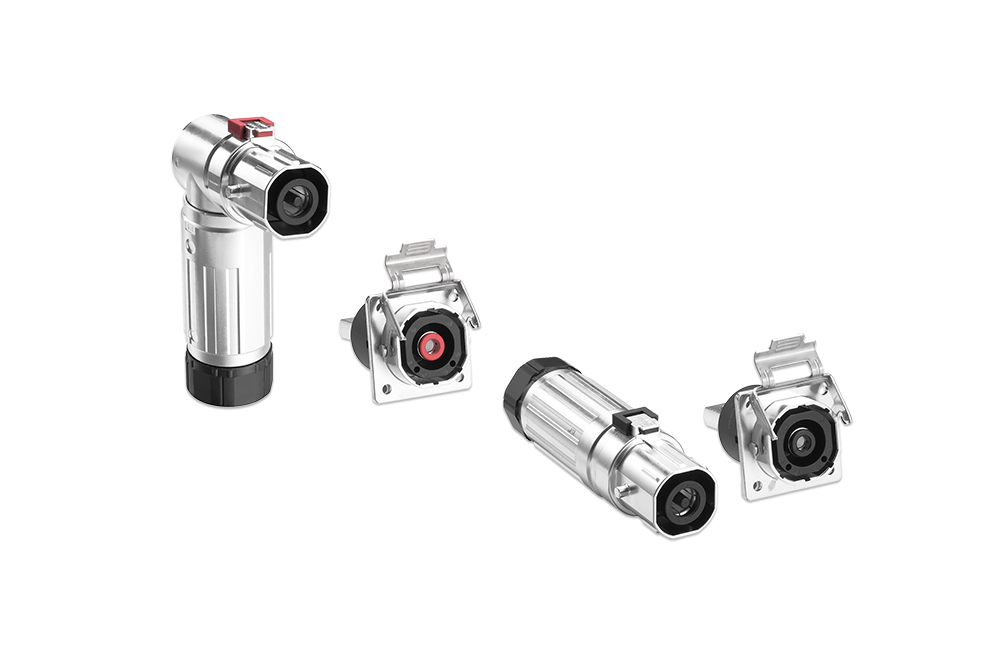
TS1 Series | High Current eMobility Power Connector
eMobility, High Current, HV Connector, Shielded, Single-Pole
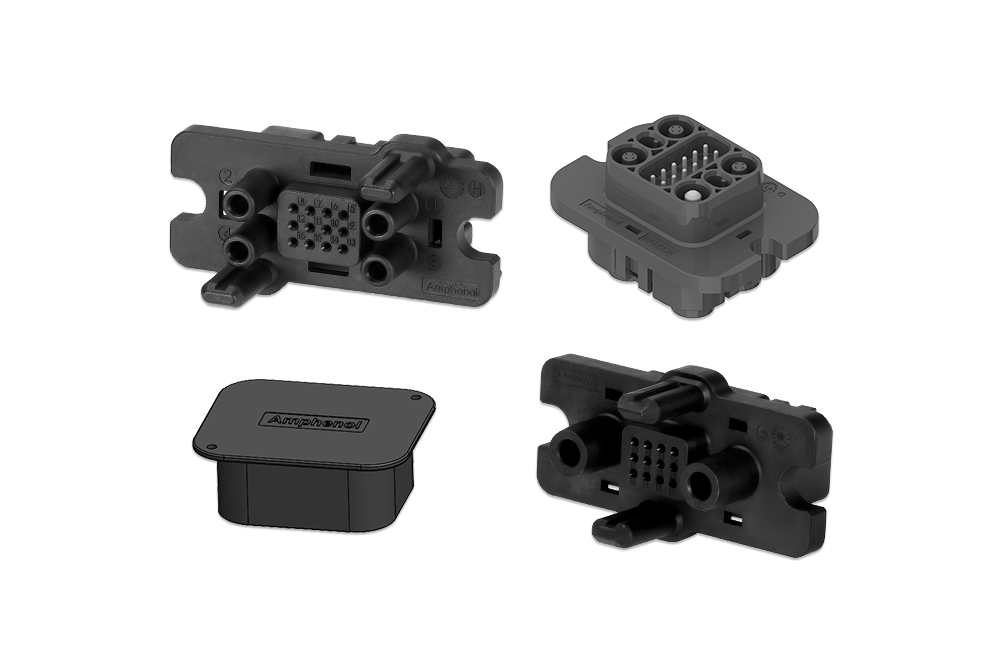
Floating Mate Connector Series | Floating Blind Mate Connector
Energy Storage, Floating Mate, Blind-Mate, Power Connector
Amphe-PV H4 Plus™ Cable Connector | Solar Connector
Panel, Power, Solar Connector

Liquid Cooling Systems | Reliable Quick Disconnect Connectors
High-Performance Thermal Management for data centers, EVs & ESS. Discover UQD & UQDB quick disconnects for high-efficiency thermal management.

Connect with Our Team
Amphenol Industrial's product lines consist of rectangular, standard miniature, fiber optic, EMI/EMP filter, and a variety of special application connectors.
Online Quote
Support