

Description
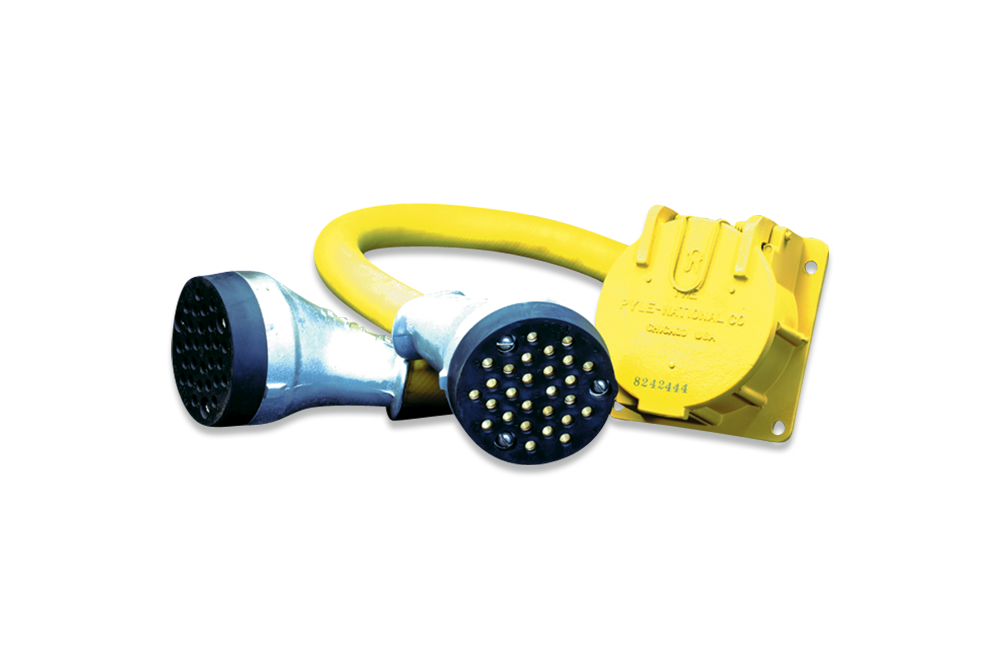
Train Line connector solutions provide reliable train line communication and control for modern passenger and commuter rail fleets. Designed around long-established 27-point multiple-unit practice and special service rail requirements, these rugged connector systems help maintain dependable electrical continuity between locomotives, cab cars, and coaches in harsh outdoor rail environments.
Mounted at the ends of rail vehicles, each train line connector carries low-voltage control and communication signals throughout the consist. Functions such as door control, public address, brake status, and traction commands can be distributed from a single control point, supporting coordinated operation across rail mass transit and intercity applications.
Table of Contents
Train Line Connector Overview
The Train Line family is a 27 pole train line connector system consisting of car-end receptacles, heavy-duty jumper cable assemblies, and stowage receptacles. Together, these components create a continuous train-line backbone for low-voltage communication and control circuits across the full consist.
Built on proven 27-point train-line geometry, these connectors are designed to support dependable interoperability, long fleet lifecycles, and consistent wiring practices across locomotives, coaches, and cab cars. Keying features, protective covers, and rail-grade jumper constructions help improve serviceability and reduce wear in daily rail operation.
For rail engineers, OEMs, and fleet operators, a standardized train line connector helps simplify integration and support long-term maintenance planning across passenger rail platforms. Because these systems are exposed at the car ends and used repeatedly during service, they must continue performing through daily handling, weather exposure, coupling cycles, and long operating intervals. A proven 27 pole train line connector architecture helps support dependable train-line continuity while making refurbishment, replacement, and fleet standardization easier over time.
In passenger and commuter rail applications, consistency across the train is just as important as durability at each connection point. A train line connector helps provide that consistency by supporting standardized communication and control paths between vehicles, making it easier for engineers and maintenance teams to manage integration, servicing, and long-term fleet reliability. This is especially important where rolling stock may remain in service for many years and where replacement components need to support dependable fit, function, and interoperability.
Applications in Rail Mass Transit
The Train Line connector system is used in intercity passenger trains, commuter rail equipment, urban rail systems, and fleet refurbishment programs where dependable train-line continuity is required. Standardizing on a 27 pole train line connector architecture helps support interoperability, simplify fleet integration, and maintain consistent wiring schemes across rolling stock platforms.
Train line connector solutions are especially valuable in fleets where vehicles may be reconfigured, modernized, or maintained over long service lifecycles. A rugged and serviceable train line connector can help operators support coordinated train communication and control while reducing complexity for inspection, replacement planning, and day-to-day maintenance activity. This makes the platform well suited for both new rail vehicle programs and ongoing upgrades to existing passenger and commuter rail equipment.
Resources & Related Solutions
For additional rail application context, visit the Rail Mass Transit market page. Related connector solutions may also include PT Series and Micro-Bayonet Connector Series. For broader industry guidance, engineers may also reference the American Public Transportation Association (APTA).
Features & Benefits
70 lbs. maximum Mating and Unmating Forces
150 megohms minimum Insulation Resistance
1960 volts rms Dielectric withstanding Voltage
-57° F to +110° F Operating Ambient Temperature
Rain tight per U/L Standard
600 volts rms, 400 Amps Electrical Rating
Spring loaded cover
Receptacle housing RPC-17-WO
Low mating and umating forces improves operator safety
Design offers repairability and low maintenance and replacement cost
Specifications
Electrical
Voltage
600V
Current Rating
400A
Number of contacts
27
Mechanical
Mating cycles
500
Wire size (mm²)
10-12 AWG
Keyway
1
Material
Contact plating
Silver
Contacts
Copper alloy
Sealing components
Rubber
Shell
Aluminum
Environmental
Temperature range
57°F to +110°F
Protection class
IP67
RoHS
Yes, optional
REACH
Yes, optional
Connectors to fit your industry requirements by design
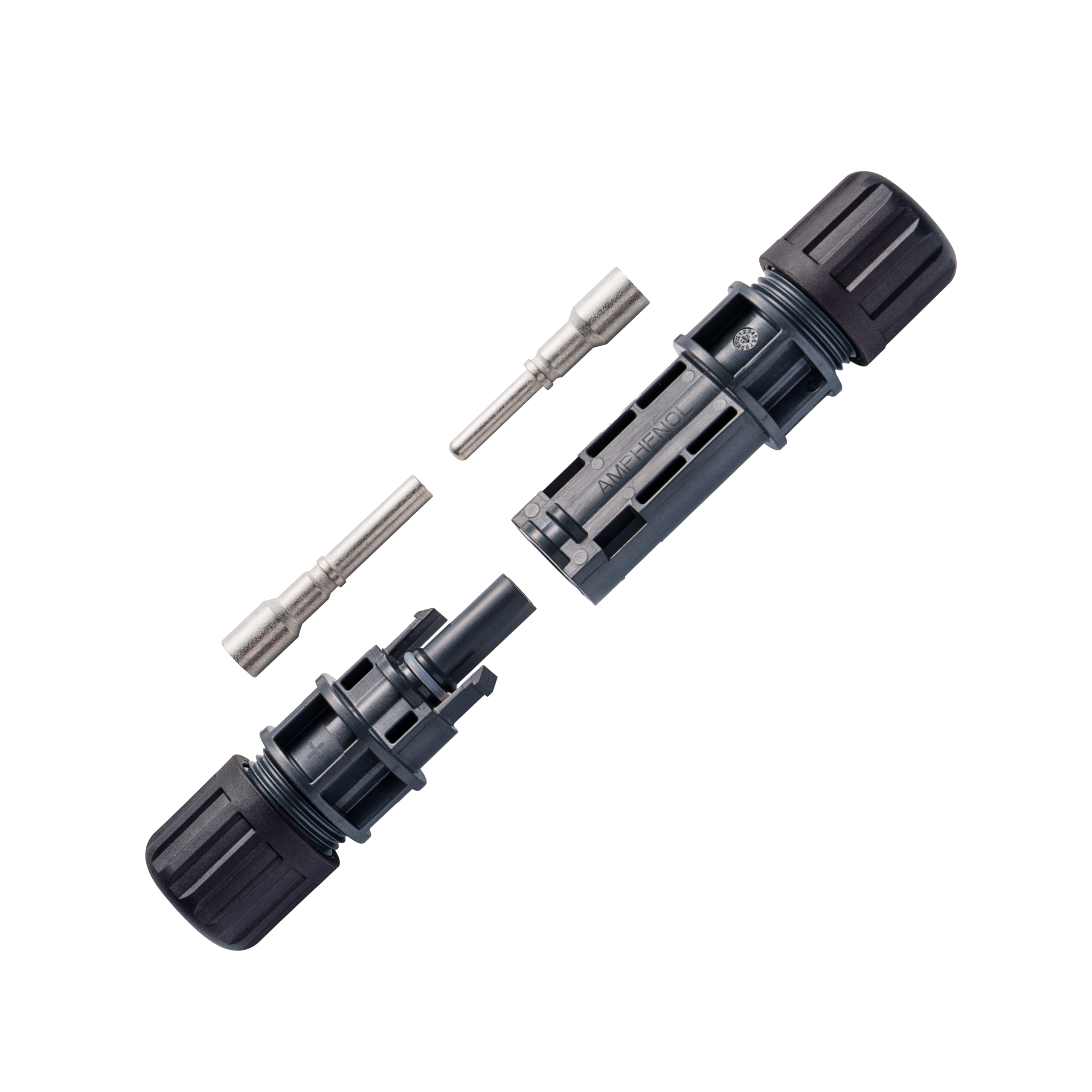
H4 P2KV Solar Connector | Amphe-PV 2000V DC
Panel, Power, Solar Connector
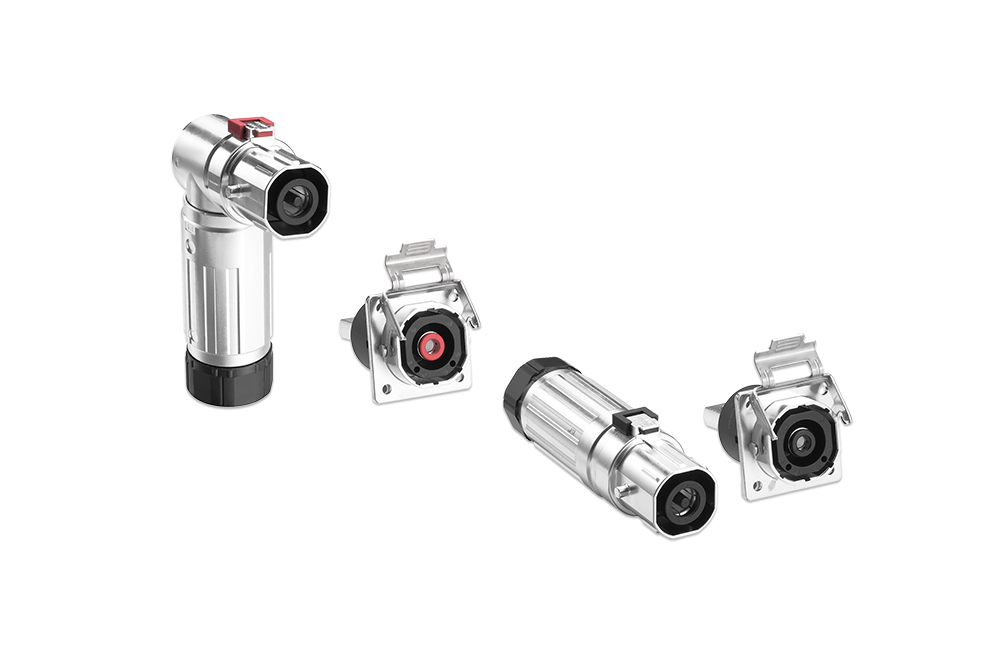
TS1 Series | High Current eMobility Power Connector
eMobility, High Current, HV Connector, Shielded, Single-Pole
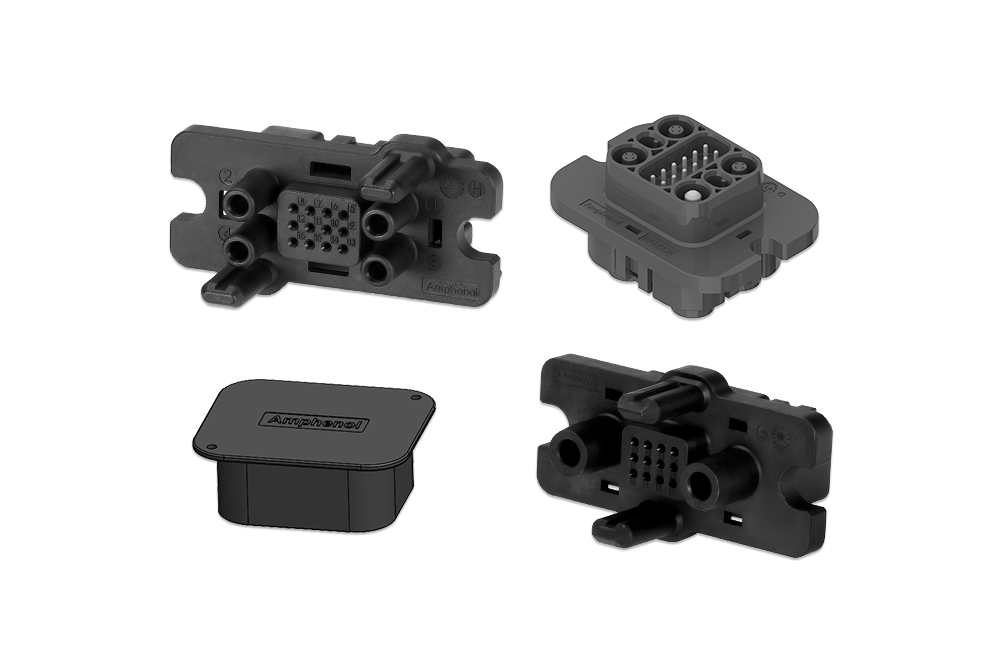
Floating Mate Connector Series | Floating Blind Mate Connector
Energy Storage, Floating Mate, Blind-Mate, Power Connector
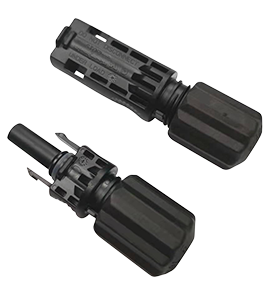
Amphe-PV H4 Plus™ Cable Connector | Solar Connector
Panel, Power, Solar Connector

Connect with Our Team
Amphenol Industrial's product lines consist of rectangular, standard miniature, fiber optic, EMI/EMP filter, and a variety of special application connectors.
Online Quote
Support